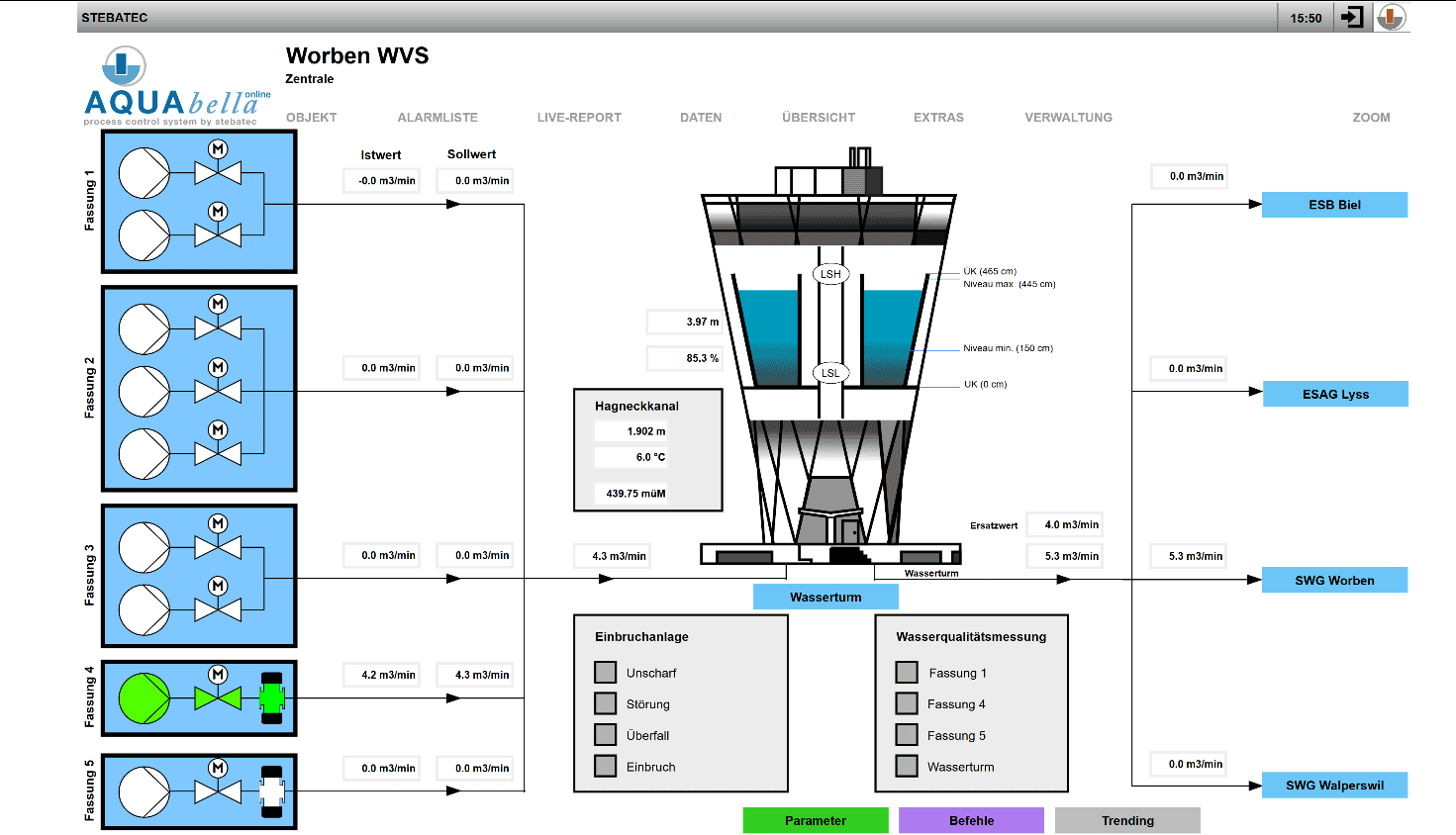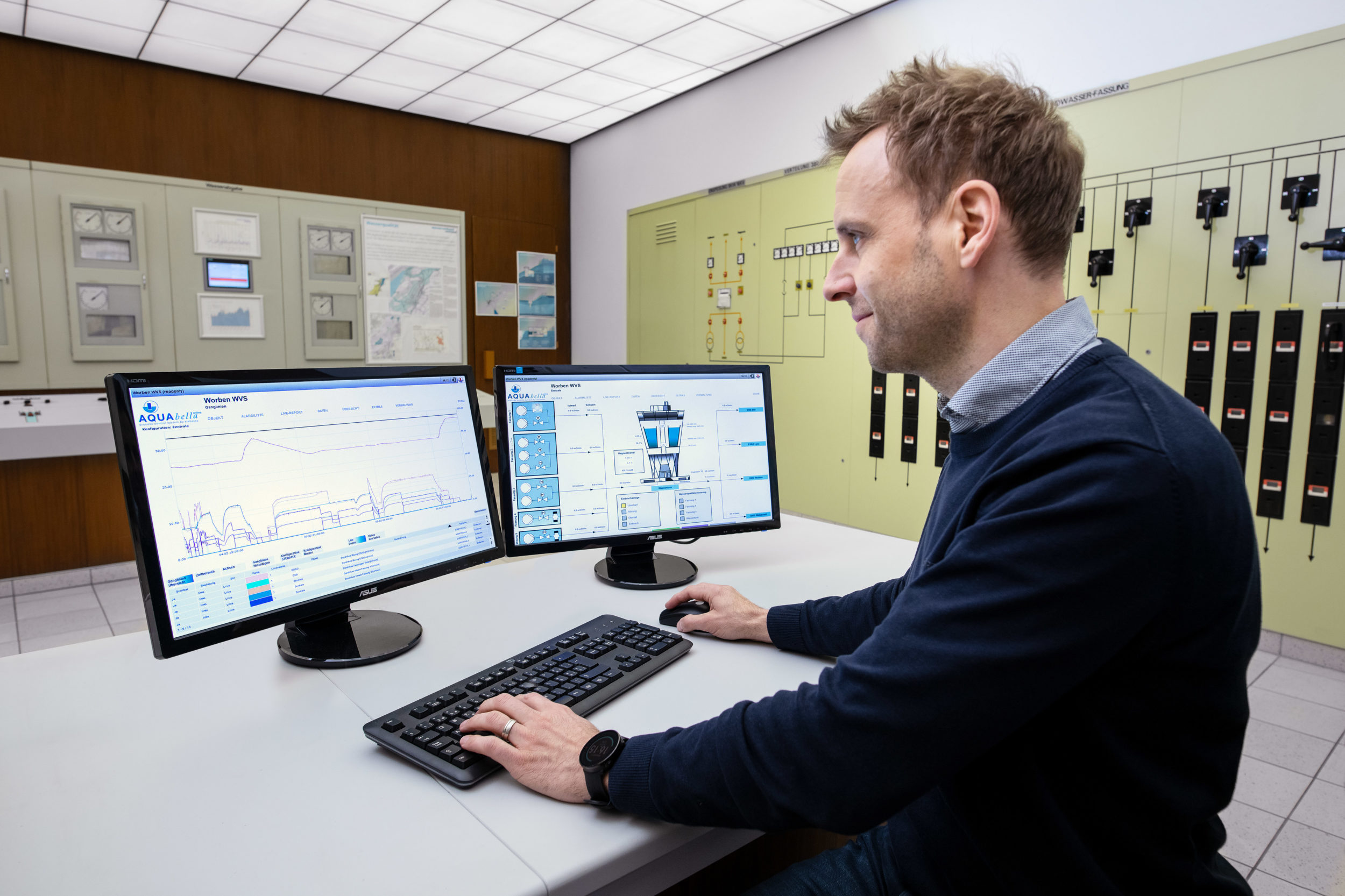


Last year, STEBATEC was allowed to replace the existing process control system and the control software of the water supply system and implement extensive process optimizations.
Energie Service Biel/Bienne, Energie Seeland AG and the Seeland Water Supply Association are partners of the Wasserverbund Seeland, which supplies drinking water to around 30 communities and 100,000 people in the Bernese Seeland.
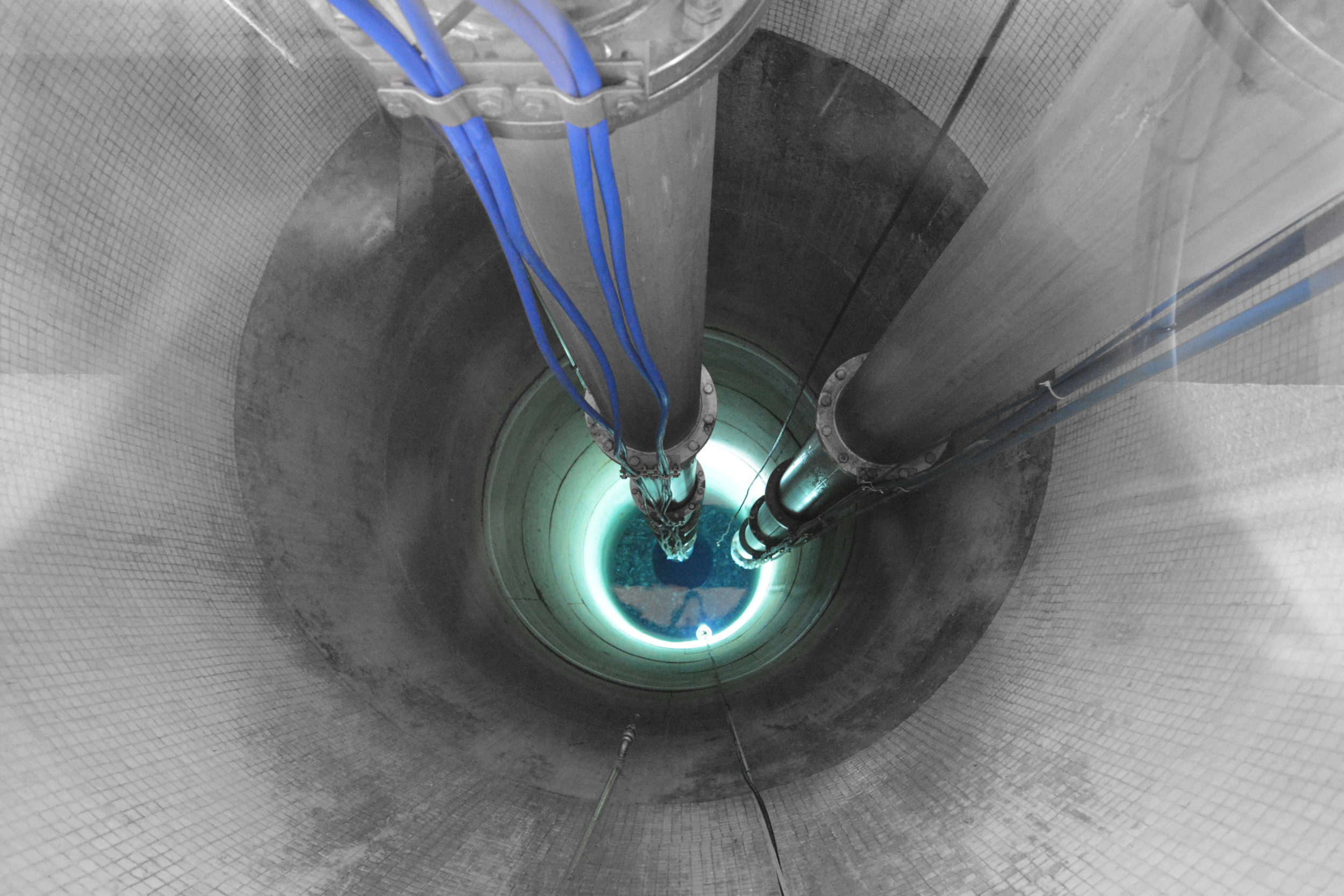
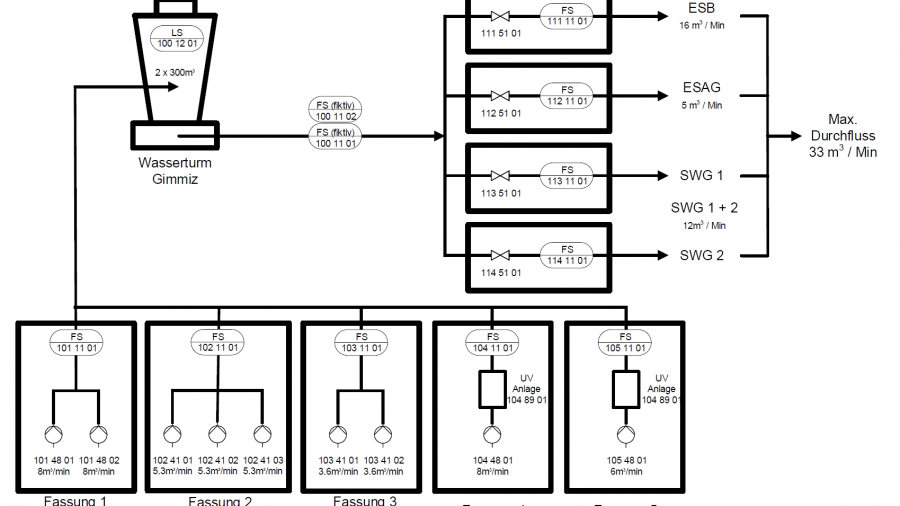
This is groundwater that has already been filtered from the permeable Aare gravel underneath the Bernese Seeland to drinking water quality. The groundwater is extracted in five water catchments sunk near Walperswil and pumped into the high reservoir of the Gimmiz water tower. From there it flows in free flow to the pumping stations of the individual water suppliers.
Preventing over 40 unnecessary pump cycles
The reservoir in the water tower is very small with its 600 m3 considering the average daily demand of 10,500 m3 and a maximum reference quantity of 33 m3/min. Since the pumps in the water catchments were previ-ously either running at maximum capacity or not at all, up to 45 pumping commands were issued daily.
At the two catchments closest to the Hagneck Canal, which make the largest contribution, the water is also disinfected with UV light. However, the service life of the UV tubes used for this purpose suffers considerably from the intermittent operation.
The Seeland Water Authority therefore sought a control regime that would nevertheless allow reliable and economical operation under these circumstances.
A courageous proposal for automation
The WVS had already decided that the existing pumps were to be replaced by pumps with frequency converters in order to operate the pumps in a modulating mode in future. For many years, STEBATEC had been active as the electrical planner and installation company for the water supply system and performed and coordinated this task. On the basis of the great experience of STEBATEC, a control concept was created after the retrofitting, which exploits the full potential of the system.
The volume of the reservoir in the water tower would be managed in such a way that there is always enough water available for the users but can also be used as a buffer during breaks in supply.
In addition, preference had to be given to the UV-equipped sockets located close to the Hagneck Canal. With these conditions, the necessary pump cycles should be reduced to a minimum.
The detailed proposal convinced the management of Wasserverbund Seeland. After examining further vari-ants of other possible suppliers, the WVS decided to go the distance with STEBATEC.
Innovation has paid off
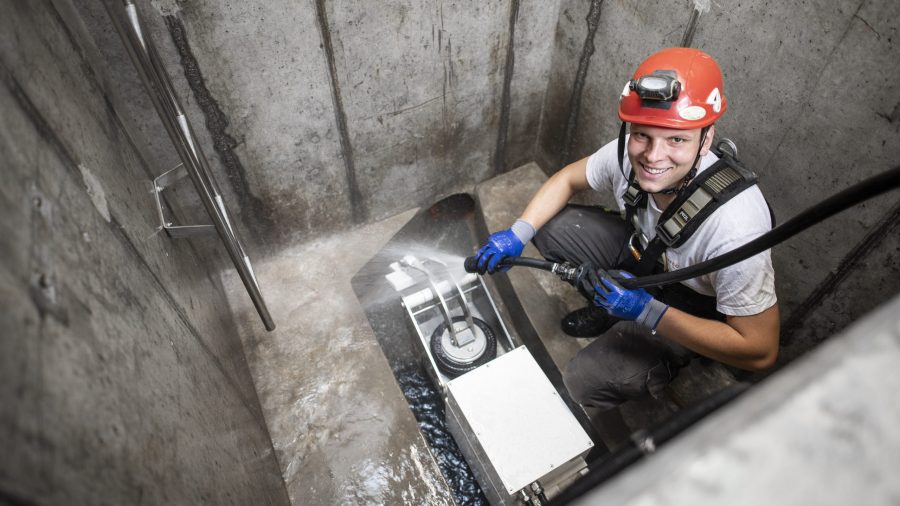
It goes without saying that all work had to be carried out while the plant was in operation, as a drinking water supply has to be maintained at all times. The existing control system therefore had to remain in operation while the work and commissioning of the new control systems ran in parallel.
This meant that STEBATEC had to take over the on-call service for the control system components during the reconstruction phase in order to be able to intervene quickly in the event of any malfunctions. However, thanks to the project team’s extensive experience, the necessary unscheduled deployments could be kept to a minimum.
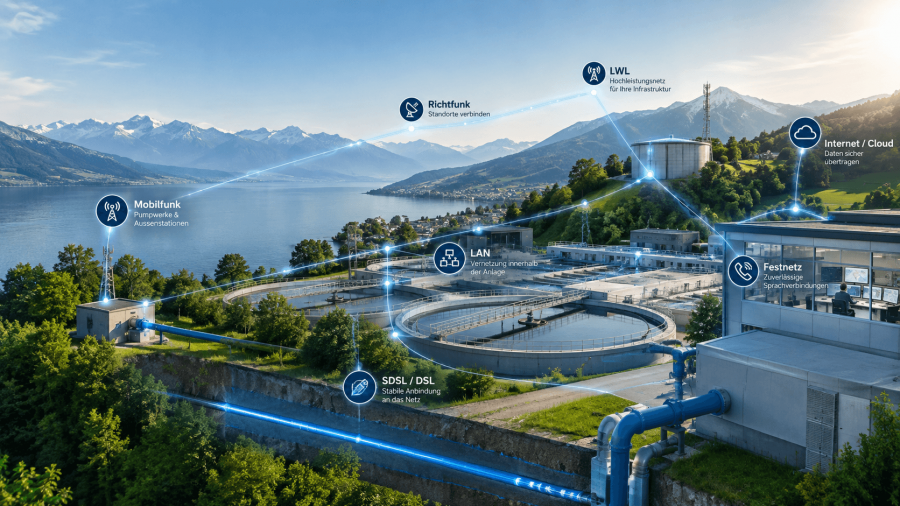
A drinking water supply is one of the most important parts of public infrastructure. The necessary IT and network environment for the process control system AQUAbella, which controls the networked plant, must therefore comply with the extended guidelines of the ICT standard of the industry association SVGW. The measures for maintaining IT security were therefore given a very high priority during the system change of the Wasserverbund Seeland.
With such extensive changes to an existing system, which have to be carried out while it is in operation, the commissioning of the new regime always represents the moment of truth. Wasserverbund Seeland AG was able to note with satisfaction that everything worked smoothly, and that the new pumping regime fully lives up to the expectations.