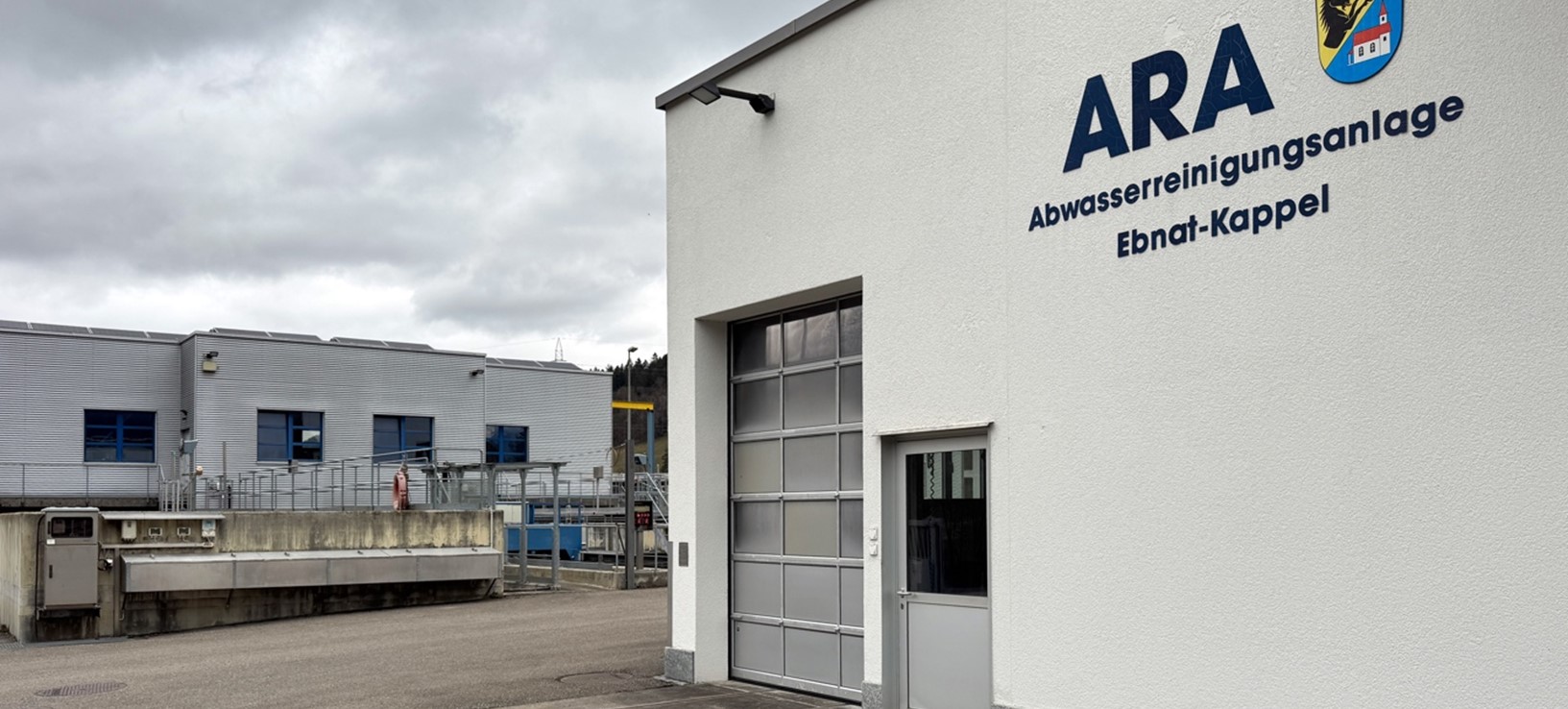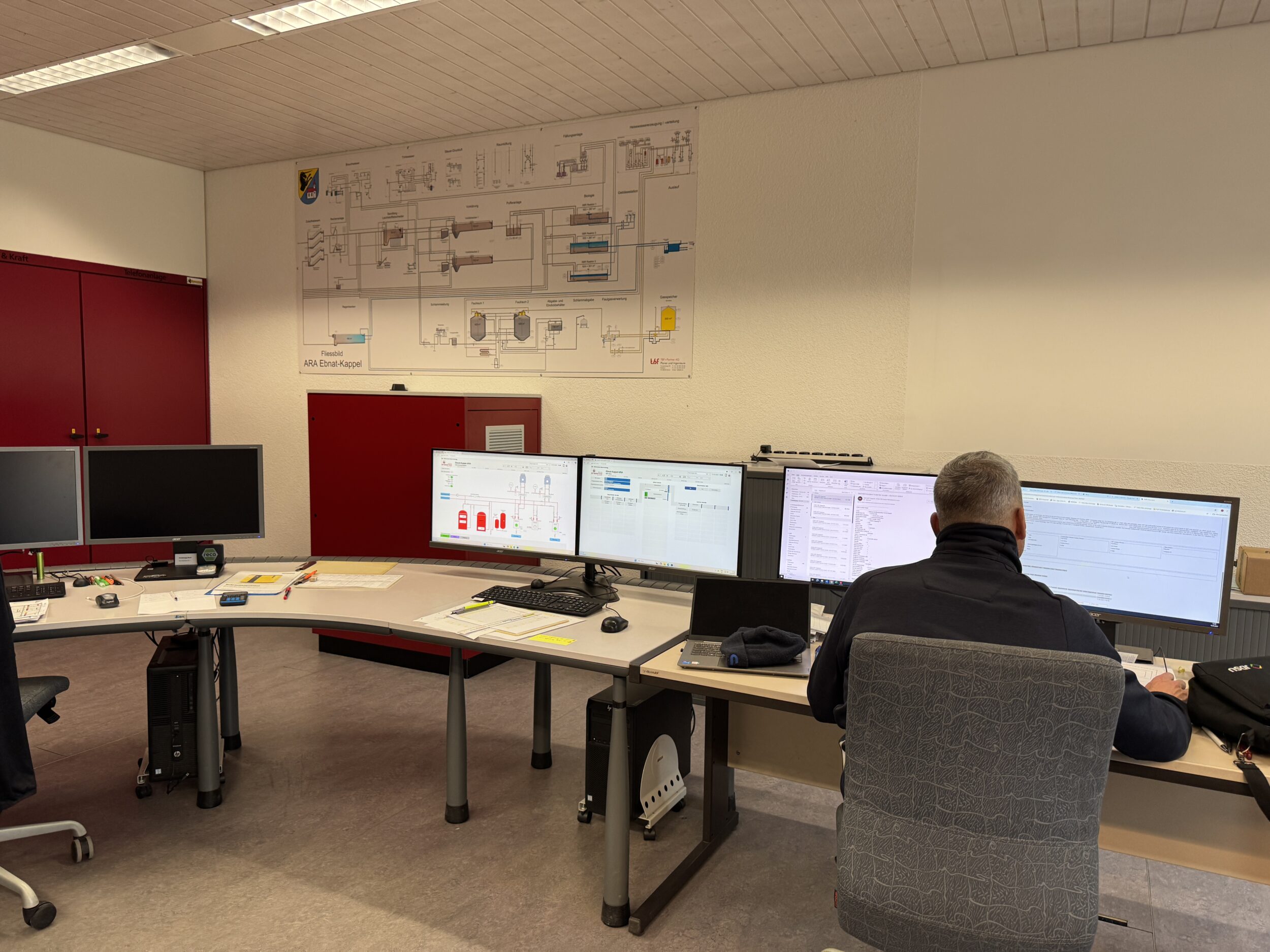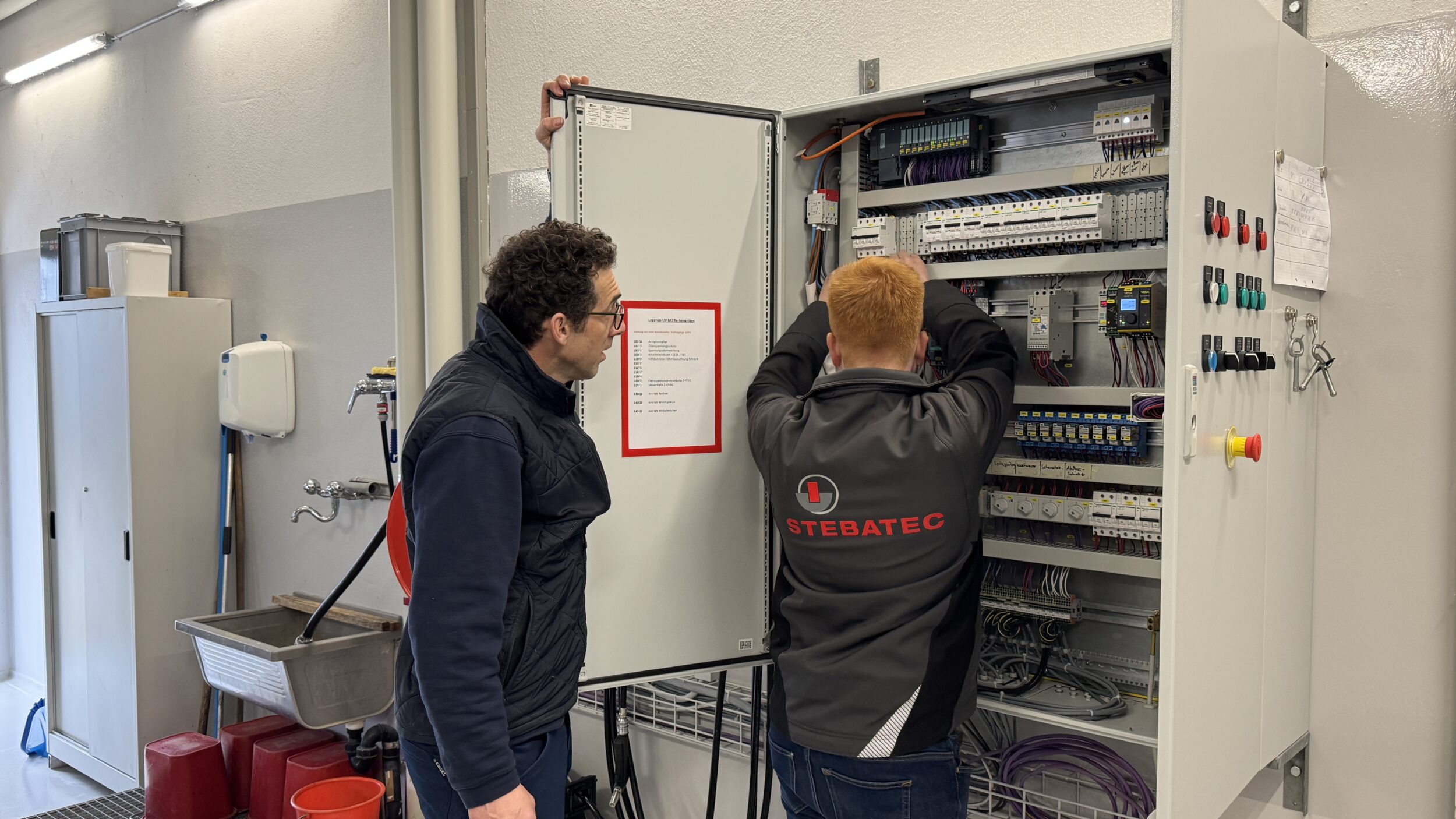
The Ebnat-Kappel wastewater treatment plant sets a milestone in efficient and future-oriented wastewater treatment. With the introduction of a fully dynamic sequencing batch reactor (SBR) process and sophisticated control technology from STEBATEC AG, not only is operation optimized in terms of energy efficiency, but the project also serves as a real-world laboratory for the planned complete renovation of the wastewater treatment plant – and an example of how existing infrastructure can be made future-proof through smart control. A generational project for the Upper Toggenburg region.
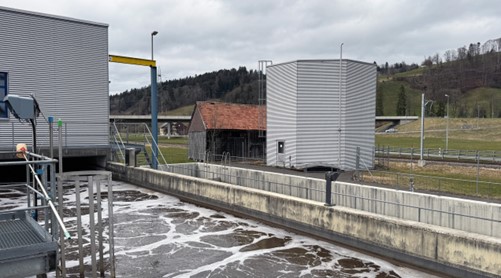
The existing wastewater treatment plant dates back to the 1970s and treats the wastewater of around 6,500 equivalent inhabitants every day. Technological developments in wastewater treatment are clearly moving in one direction: away from rigid treatment cycles and toward intelligent, demand-oriented systems. The Ebnat-Kappel village cooperative, which owns the plant, is also moving in this direction. Since the beginning of 2025, treatment there has been carried out in real time – using a system that responds flexibly to the actual load. The advantages: greater energy efficiency, higher operational reliability, and better treatment performance.
From “standard procedure” to real-time control
Traditional wastewater treatment plants operate according to a fixed schedule, regardless of the actual load. “The problem is that they always run at full capacity, even when it’s not necessary,” says Beat Anderegg, wastewater treatment plant manager at ARA. “This makes neither economic nor ecological sense. I was convinced that there had to be a better way.”
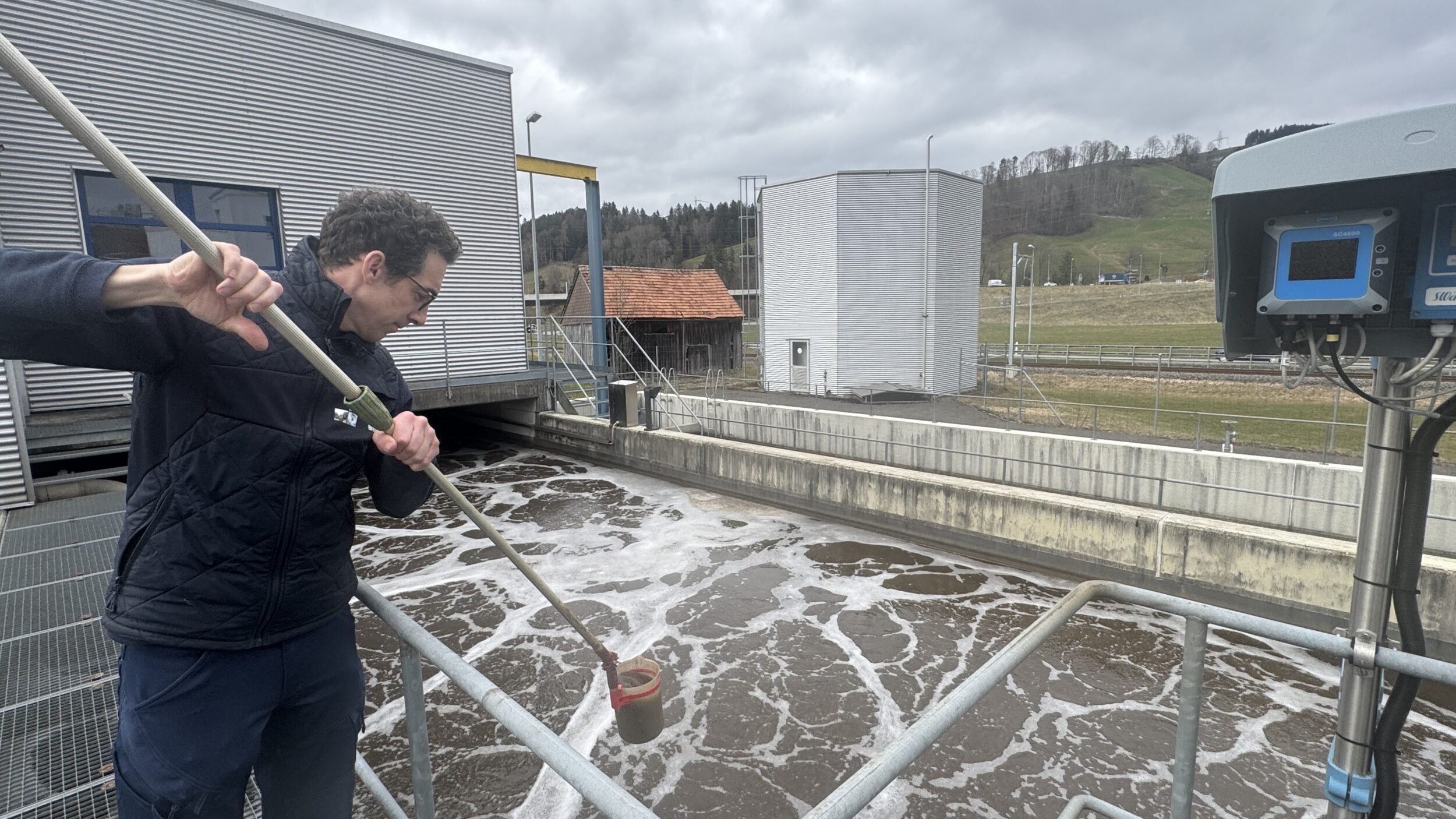
He found this better solution in STEBATEC’s fully dynamic SBR system. The control system combines modern sensor technology with intelligent software. It continuously measures the concentrations of ammonium, oxygen, and nitrate – and adjusts the reactor processes in real time. This has clear advantages:
- High load → maximum cleaning performance
- Low load → minimum energy consumption, e.g., for aeration
- Always exactly as much as necessary – never more, never less
“Until the end of 2024, we worked rigidly according to a set formula,” adds Roman Berweger, deputy wastewater treatment plant manager. “Today, the control system makes situational decisions for us – this saves electricity and ensures consistently high cleaning quality.” Michael Pauli, Head of Automation at STEBATEC, sums it up as follows: “You can think of it like a cooking pot. Our software doses the ingredients precisely – and continuously adapts the recipe to the level of contamination. That’s what makes the difference.”
SBR control system: The smart brain of the plant
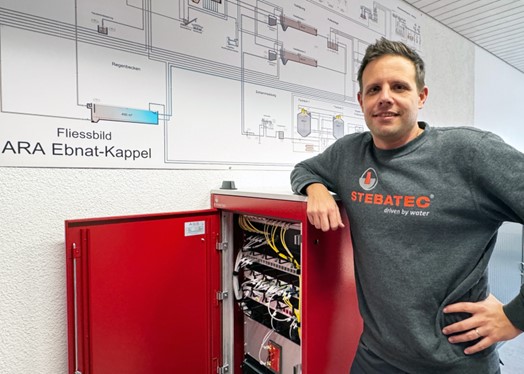
“The new SBR control system is the brain of the wastewater treatment plant—without it, nothing works,” says Simeon Grossenbacher, project manager and automation engineer at STEBATEC. After around nine months of planning and testing, the modern solution went into operation at the beginning of 2025. It measures relevant parameters, intelligently controls the cleaning cycles, and automatically adapts to load fluctuations.
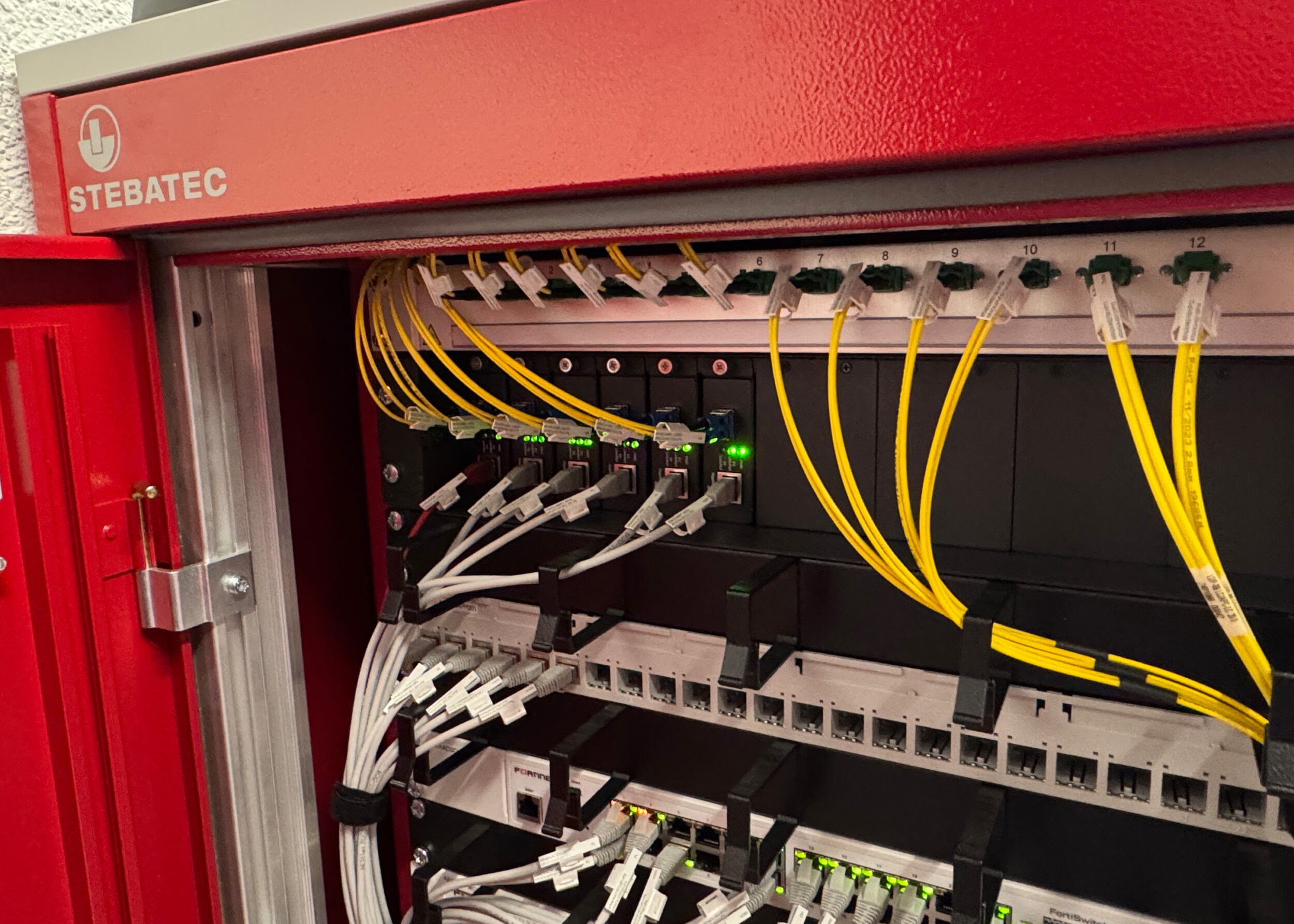
Wastewater treatment plant manager Beat Anderegg adds: “The old control system was simply outdated. Now we have a system that is technologically impressive and will last for a long time.” His conclusion: “With a modern control system, STEBATEC gets more out of a 50-year-old plant than any structural upgrade could ever achieve.” ” The IT infrastructure has also been completely renewed, making the wastewater treatment plant digitally fit for the future.
The new control system at a glance:
- Continuous measurement of relevant parameters (ammonium, nitrate and oxygen)
- Intelligent cycle control for loading, cleaning, and unloading
- Automatic adjustment in case of load fluctuations
Operational advantages:
- Lower energy consumption thanks to controlled ventilation
- Higher water quality through precise control
- Faster response to changing inflows and weather conditions
“This technology cleans in real time, and that’s something everyone on the team can understand,” says Anderegg. “It’s a real technological leap forward. What’s more, the system can be further developed in a modular way by our own operations team – that makes it particularly valuable.”
Gaining experience for the next generation of wastewater treatment plants
What has been implemented in Ebnat-Kappel is much more than an upgrade—it is a practical test for the future large-scale plant. The current wastewater treatment plant is due to be replaced in the next few years, although this has not yet been decided at the political level. Nevertheless, the question already arises: Which technology delivers the best performance in operation—both ecologically and economically?
“If we know how our new plant should function, then we are testing it now,” says Anderegg. “This allows us to plan with real knowledge – not just on the basis of simulations.”
Advantages of the pilot project:
- Practical experience: Control system is tested and further developed in everyday use
- Cost efficiency: Existing infrastructure remains in place – targeted investments
- New insights: e.g., during heavy rainfall – meteor water pushes wastewater ahead of it
- Technological leverage: the control system is the digital pacemaker of the system
Efficiency, sustainability, and suitability for everyday use
The results so far clearly show that the investment is worthwhile. Beat Anderegg recommends testing the system in other facilities as well—especially those where the load fluctuates greatly: “Stadiums, festivals, industrial parks, tourist regions—everywhere, requirements are constantly changing. This is exactly where a fully dynamic system like STEBATEC’s shows its strengths. Everything is different from batch to batch – and the control system adapts automatically.”
The Ebnat-Kappel wastewater treatment plant proves that sustainable wastewater treatment does not necessarily require costly construction measures. Intelligent control technology can reduce operating costs, save energy, and protect the environment.